
CareerX and CreatorX: How Creative Education Is Evolving for the Next Generation
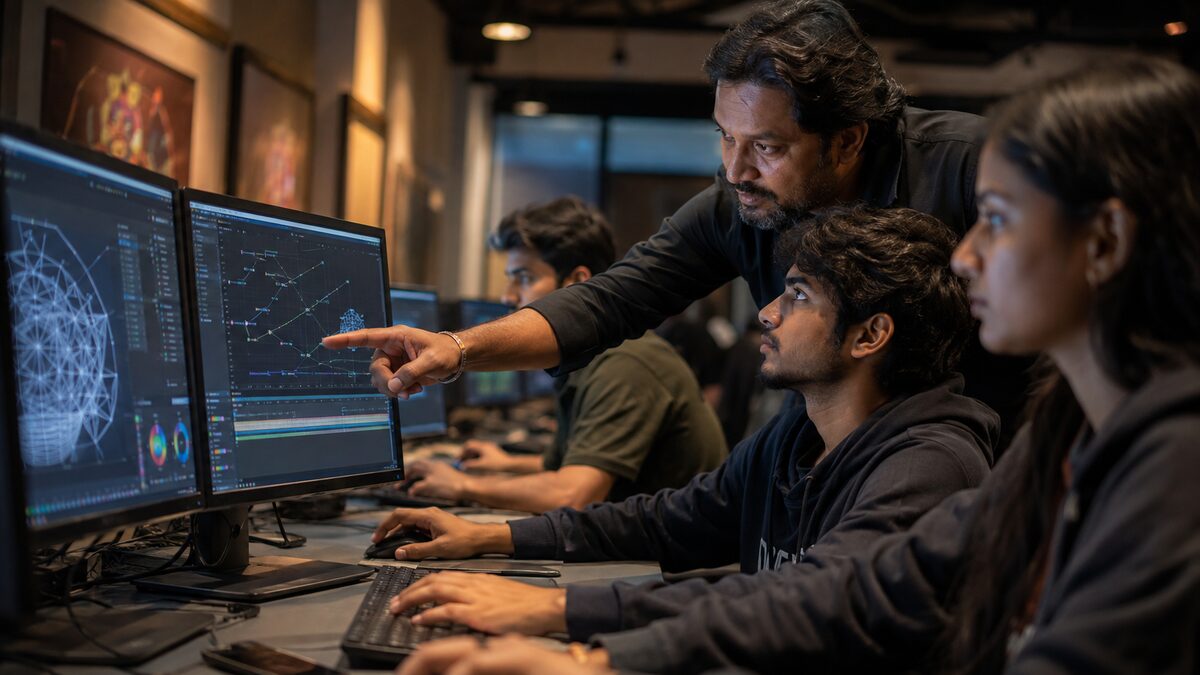
Ten years ago, a student who announced that they wanted to work in animation usually heard the same sentence at home: finish a proper degree first, then we will see. That sentence is getting rarer. Studios are hiring, streaming platforms need a steady supply of finished work, and an entire layer of independent creators now earns a living from content they publish under their own name.
What has changed is not only the volume of work. It is the shape of it. A student leaving a creative programme today may walk into a production house, or may never join one at all. Both outcomes are now normal, and a single syllabus cannot prepare a learner for both. That is the thinking behind two-track models such as CareerX and CreatorX. This article looks at what the split actually means for anyone weighing up the best animation courses in Kolkata or a creative programme anywhere else in India, and what families should check before they pay a fee.
The industry grew faster than the classroom
India's AVGC-XR sector, which covers animation, visual effects, comics and extended reality, currently sits somewhere between USD 2.5 and 3 billion. Sector projections place it close to USD 26 billion by 2030, with more than 20 lakh direct and indirect jobs attached to that growth. The animation and VFX portion alone is expected to move from roughly USD 1.3 billion to USD 2.2 billion within three years.
Those figures get quoted often. The more revealing detail sits underneath them: India still holds under one percent of the global market. The gap is not caused by a shortage of talent or effort. It is caused by workflow. Plenty of students finish a course able to model, rig or composite, and still struggle in their first fortnight on a production floor because nobody showed them how a shot actually travels from brief to review to final delivery. Recruiters mention this again and again, and it explains why a technically capable fresher often loses out to someone with fewer software hours but better production habits.
One syllabus stopped fitting two kinds of students
Sit in on any creative classroom and two groups become visible within a few weeks.
The first group wants a seat inside a studio. They are drawn to scale, to being one specialist inside a pipeline of forty people, to working on something that carries a recognisable logo at the end. Their goal is a portfolio that survives a technical review and a showreel that clears a recruiter's first filter.
The second group has no interest in that at all. They already run an Instagram page, or they post short films, or they are quietly building a comic nobody has seen yet. Their idea of success is an audience and an income they control. A studio job, for them, is a fallback rather than an ambition.
For years, both groups were handed the same course structure, and one of them was always underserved. The career-focused student got the training, and the creator-minded student got software knowledge with no idea how to convert it into earnings. The two-track model exists to close that second gap.
What a career track is meant to fix
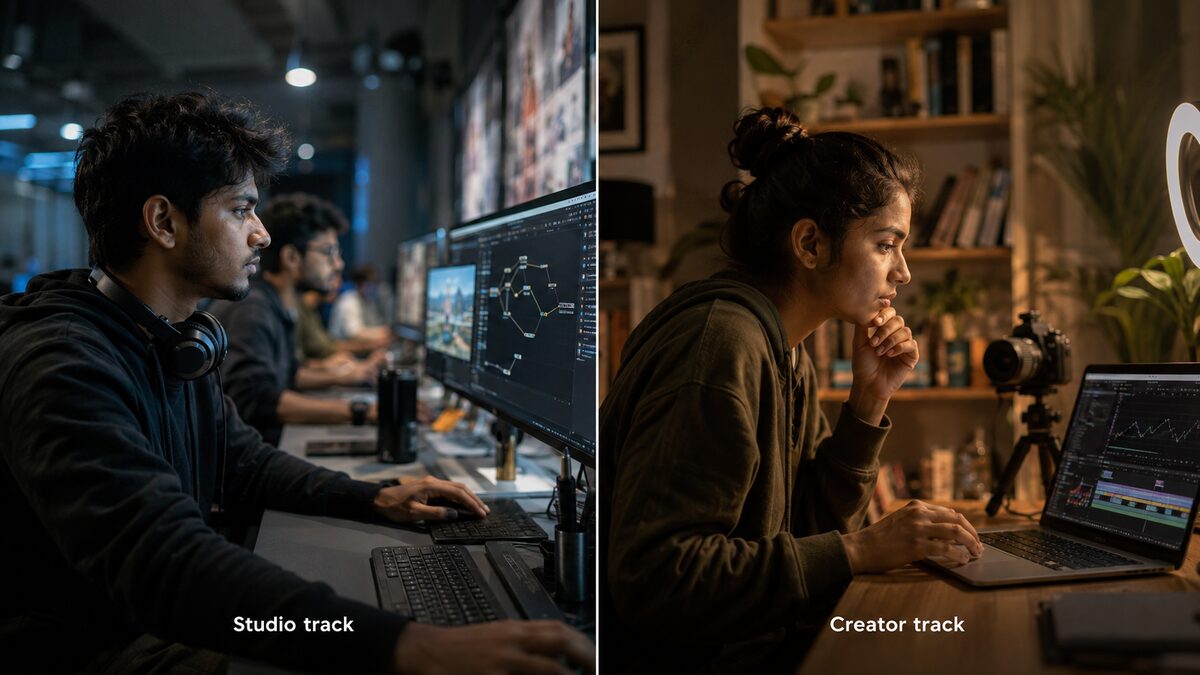
CareerX sits on top of the core programmes in animation, visual effects and design, and its job is narrow but important: close the distance between classroom output and studio expectation. In practice, that means structured review cycles instead of a single submission at the end, mentor feedback from people who have shipped work commercially, and projects that mimic real production constraints such as fixed deadlines, revision rounds and version control. Students taking VFX courses in Kolkata benefit most from this layer, because compositing and effects work is where sloppy file management and weak review discipline show up fastest.
None of this is glamorous. Naming conventions, render settings, working within someone else's scene file, taking notes without arguing about them. But this is precisely the material that separates a hireable fresher from an unhireable one, and it is usually the part missing when a student learns alone.
What a creator track adds on top
CreatorX starts from a different question. Not "who will hire you", but "how will you build something people follow and pay for". The subject list reflects that shift:
- Short-form video, from writing a hook to cutting a sequence that holds attention
- Digital comics and serialised storytelling, including how a series is structured episode by episode
- AI-assisted content workflows, used as production support rather than as a shortcut
- Branding and audience building, which is closer to consistency and positioning than to design
- Intellectual property basics, so a creator knows what they own and how to protect it
- Monetisation, covering the difference between brand work, subscriptions, licensing and direct sales
Branding is where the two tracks overlap most. A creator building an audience is doing the same work a designer does for a client: consistent type, colour and layout decisions repeated until people recognise them without being told. Students coming from graphic design courses in Kolkata usually adapt to this part fastest, because they already think in systems rather than one-off pieces.
The intellectual property piece deserves attention. A large number of young Indian creators publish work without any clear idea of who holds the rights, what a client contract is actually transferring, or what to do when someone reposts their film without credit. Teaching that inside a creative programme is overdue.
Why the order of the two tracks matters
In this model, a student finishes the career-focused curriculum first and then moves into the creator track if the interest is there. That sequence is deliberate, and it is the right way round.
Craft has to come before distribution. A creator who understands pipeline discipline, timing and finish quality will always outrun one who only knows how to publish. The reverse is not true. Publishing skills without production skills produce a lot of content and very little that holds up. Starting with the studio-grade foundation also keeps the door open, which matters because plenty of students change their mind halfway through, and a good programme should let them.
Portfolios have quietly replaced certificates

Hiring in creative fields has moved almost entirely to evidence. A recruiter will look at a showreel before they look at a certificate, and an independent client will look at a published body of work before they look at anything else. This is a genuine departure from how most Indian families evaluate education, where the qualification on paper has traditionally carried the weight. Students who are still weighing up which stream to take after Class 12 should factor this in early, because a creative field rewards accumulated work in a way that most conventional degrees do not.
It also changes what a course is worth. A programme that leaves a student with six finished, presentable pieces has done more for their prospects than one that leaves them with a marksheet and a folder of exercises.
What to check before enrolling
Whether the programme is in Kolkata, Bengaluru or anywhere else, a few questions separate a serious offering from a repackaged software class:
- How many finished pieces will the student leave with, and can you see samples from last year's batch?
- Who reviews the work, and are they still active in the industry?
- Does the programme cover production workflow, or only tools?
- If there is a creator track, does it teach rights and earnings, or just editing?
- What happens after the course ends, in terms of placement support or continued mentoring?
It is worth doing this comparison across more than one institute before committing. Reading through independent course listings and student-facing admission guides alongside the institute's own brochure usually surfaces the questions a counsellor will not raise on their own.
Where creative education goes from here
The direction is fairly clear. Curricula will keep absorbing AI-assisted workflows, because studios already use them and there is no benefit in pretending otherwise. Industry partnerships will keep growing, because they are the cheapest way to keep a syllabus honest. And the creator route will stop being treated as the option students take when a job does not work out.
That last shift is the significant one. For a long time, independent creative work in India carried a whiff of failure, something you did while waiting for a proper offer. It no longer reads that way, and any institute still teaching as though a studio seat is the only respectable outcome is training students for a version of the industry that has already moved on.
What this means for students
Creative education is separating into two honest paths instead of pretending one path suits everyone. One prepares a student for the production floor. The other prepares them to build something of their own. A student comparing animation courses in Kolkata today should be asking which of those two futures they are actually being trained for, and whether the programme in front of them can support both. The institutes that answer that question clearly are the ones worth the fee.